SEO Made Simple: How to Rank Higher on Google
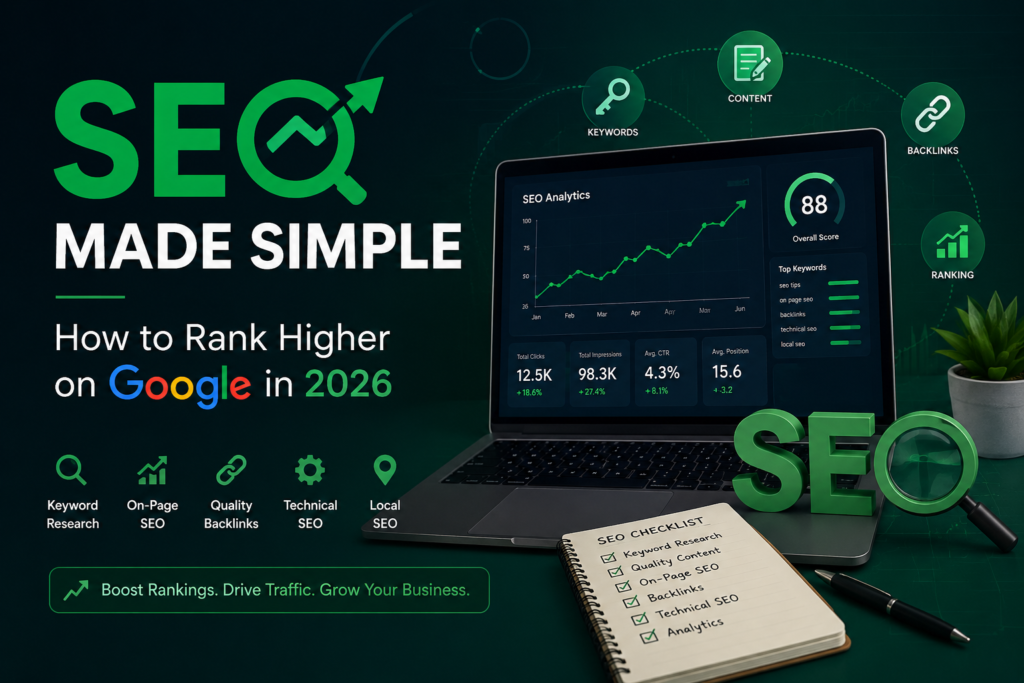
Introduction
Every day, millions of people use Google to find products, services, and information. If your business website is not appearing in search results, you could be missing valuable opportunities to attract potential customers.
Search Engine Optimization (SEO) is the process of improving your website’s visibility on search engines. A well-optimized website can drive consistent traffic, generate leads, and support long-term business growth without relying entirely on paid advertising.
What is SEO?
SEO stands for Search Engine Optimization. It involves optimizing various aspects of a website so that search engines can better understand and rank its content.
The goal is simple: appear higher in search results when users search for relevant keywords.
Why SEO Matters for Businesses
Increased Organic Traffic
Higher rankings mean more people can discover your website naturally.
Better User Experience
SEO encourages websites to be faster, mobile-friendly, and easy to navigate.
Greater Credibility
Users often trust websites that appear on the first page of Google.
Long-Term Results
Unlike paid advertising, SEO can continue generating traffic over time.
Understanding Keywords
Keywords are the words and phrases people type into search engines.
Examples:
- Digital marketing services
- SEO agency
- Social media marketing
- Website design services
Choosing the right keywords helps attract the right audience.
On-Page SEO Best Practices
Optimize Title Tags
Create clear and keyword-rich page titles.
Write Effective Meta Descriptions
Encourage users to click by summarizing the page content.
Use Proper Headings
Organize content using H1, H2, and H3 tags.
Optimize Images
Use descriptive file names and alt text.
Create Quality Content
Focus on providing useful and relevant information for users.
Technical SEO Essentials
Technical SEO ensures search engines can efficiently crawl and index your website.
Important factors include:
- Fast loading speed
- Mobile responsiveness
- Secure HTTPS connection
- XML sitemap
- Clean URL structure
A technically sound website creates a better experience for both users and search engines.
Building Backlinks
Backlinks are links from other websites pointing to your site.
Benefits include:
- Increased authority
- Better search rankings
- More referral traffic
Quality is more important than quantity. Focus on earning links from reputable websites.
Local SEO Strategies
Local SEO helps businesses appear in location-based searches.
Optimize Your Business Profile
Ensure your business information is accurate and updated.
Collect Customer Reviews
Positive reviews help build trust and improve visibility.
Use Local Keywords
Include city and region-specific keywords in your content.
Maintain Consistent Information
Keep your business name, address, and contact details consistent across platforms.
Essential SEO Tools
Useful SEO tools include:
- Google Search Console
- Google Analytics
- Ahrefs
- SEMrush
- Ubersuggest
These tools help monitor performance and identify opportunities for improvement.
Common SEO Mistakes
- Keyword stuffing
- Duplicate content
- Slow website speed
- Ignoring mobile optimization
- Poor-quality backlinks
Avoiding these issues can help maintain healthy search rankings.
Conclusion
SEO remains one of the most effective digital marketing strategies for long-term growth. By focusing on quality content, technical optimization, keyword research, and user experience, businesses can improve their search visibility and attract valuable organic traffic. Investing in SEO today can create sustainable results that continue to benefit your business for years to come.