5 Google Algorithms Every SEO Beginner Should Know
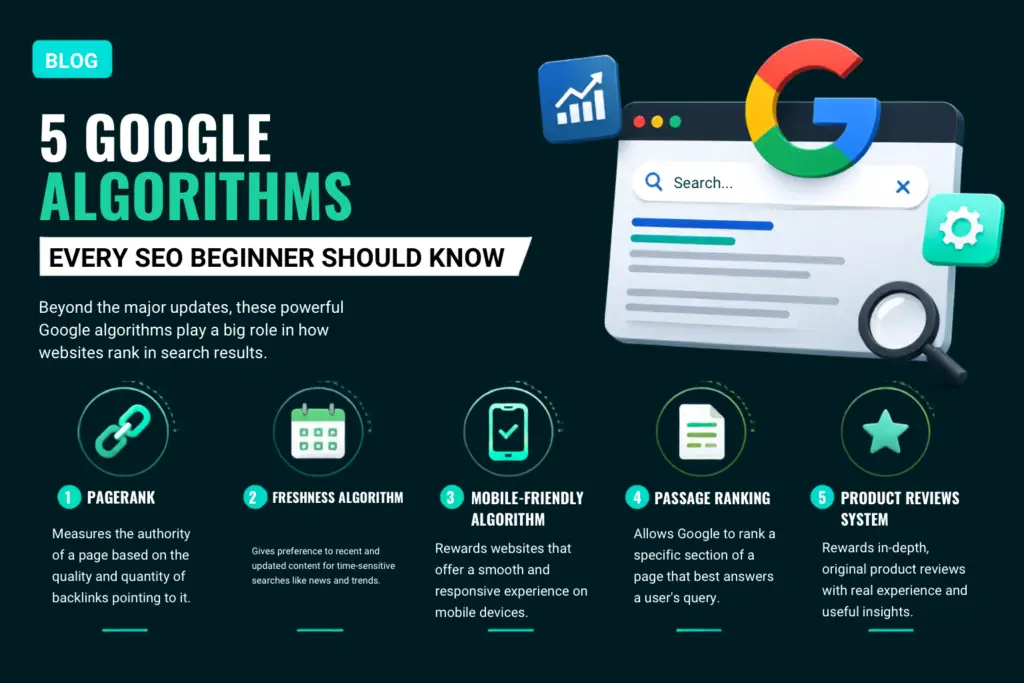
When people talk about Google SEO, names like Panda, Penguin, or RankBrain usually steal the spotlight. However, Google relies on hundreds of ranking signals and systems to determine which pages deserve to appear at the top of search results. Some of these lesser-known algorithms quietly play a major role in improving search quality and user experience.
If you’re a blogger, business owner, or digital marketer, understanding these ranking systems can help you create content that aligns with Google’s best practices. Instead of chasing shortcuts, you’ll be able to focus on strategies that deliver long-term SEO success. Let’s explore five important Google algorithms that every SEO beginner should know.
1. Page Rank
PageRank helps Google determine how trustworthy and valuable a webpage is based on its backlinks. It evaluates the authority of a webpage based on the quality and quantity of backlinks it receives. A backlink source.
Although Google now considers many other ranking factors, PageRank still helps determine how trustworthy and authoritative a page is. Earning backlinks through valuable, original content remains one of the best ways to improve your SEO.
SEO Tip: Create high-quality content that people naturally want to reference and share instead of trying to build backlinks through spammy methods.
2. Freshness Algorithm
Not every search requires the newest information, but for topics like technology, sports, news, or current events, fresh content matters. Google’s freshness algorithm prioritises recently published or updated pages whenever users are looking for the latest information.
Refreshing older blog posts by adding new statistics, examples, or updated screenshots can improve their relevance and keep them competitive in search results.
SEO Tip: Review your important blog posts every few months and update outdated information whenever possible.
3. Mobile-Friendly Algorithm
Today, most internet users browse websites using smartphones. To provide a better experience, Google gives preference to websites that are mobile-friendly. Factors such as responsive design, readable fonts, fast loading speed, and easy navigation all contribute to better rankings.
A mobile-optimised website not only performs better in Google Search but also keeps visitors engaged for longer.
SEO Tip: Test your website on multiple devices and ensure pages load quickly without compromising user experience.
4. Passage Ranking
Sometimes users are searching for a very specific answer. Instead of ranking only an entire webpage, Google’s Passage Ranking system can identify and rank a particular section of your content if it directly answers the user’s query.
This means that even long-form articles have a chance to rank well, provided they are well-structured and easy to understand.
SEO Tip: Use descriptive headings, short paragraphs, and answer common questions clearly in your content.
5. Product Reviews System
If your website publishes product reviews, Google’s Product Reviews System is especially important. It rewards reviews that are based on genuine experience, detailed analysis, comparisons, and helpful recommendations rather than generic summaries.
Google prefers content that helps users make informed buying decisions by offering original insights and practical information.
SEO Tip: Include real experiences, comparison tables, pros and cons, images, and honest recommendations to make your reviews more valuable.
Conclusion
Google’s ranking systems go far beyond the famous updates like Panda and Penguin. Algorithms such as PageRank, Freshness, Mobile-Friendly, Passage Ranking, and the Product Reviews System quietly influence how websites appear in search results every day.
The good news is that you don’t need to master every Google algorithm to succeed in SEO. By focusing on creating helpful, original content, keeping your website mobile-friendly, updating content regularly, and delivering the best possible user experience, you’ll naturally align with Google’s ranking systems. SEO is a long-term process, and understanding these lesser-known algorithms is another step toward building a website that both users and search engines trust.